

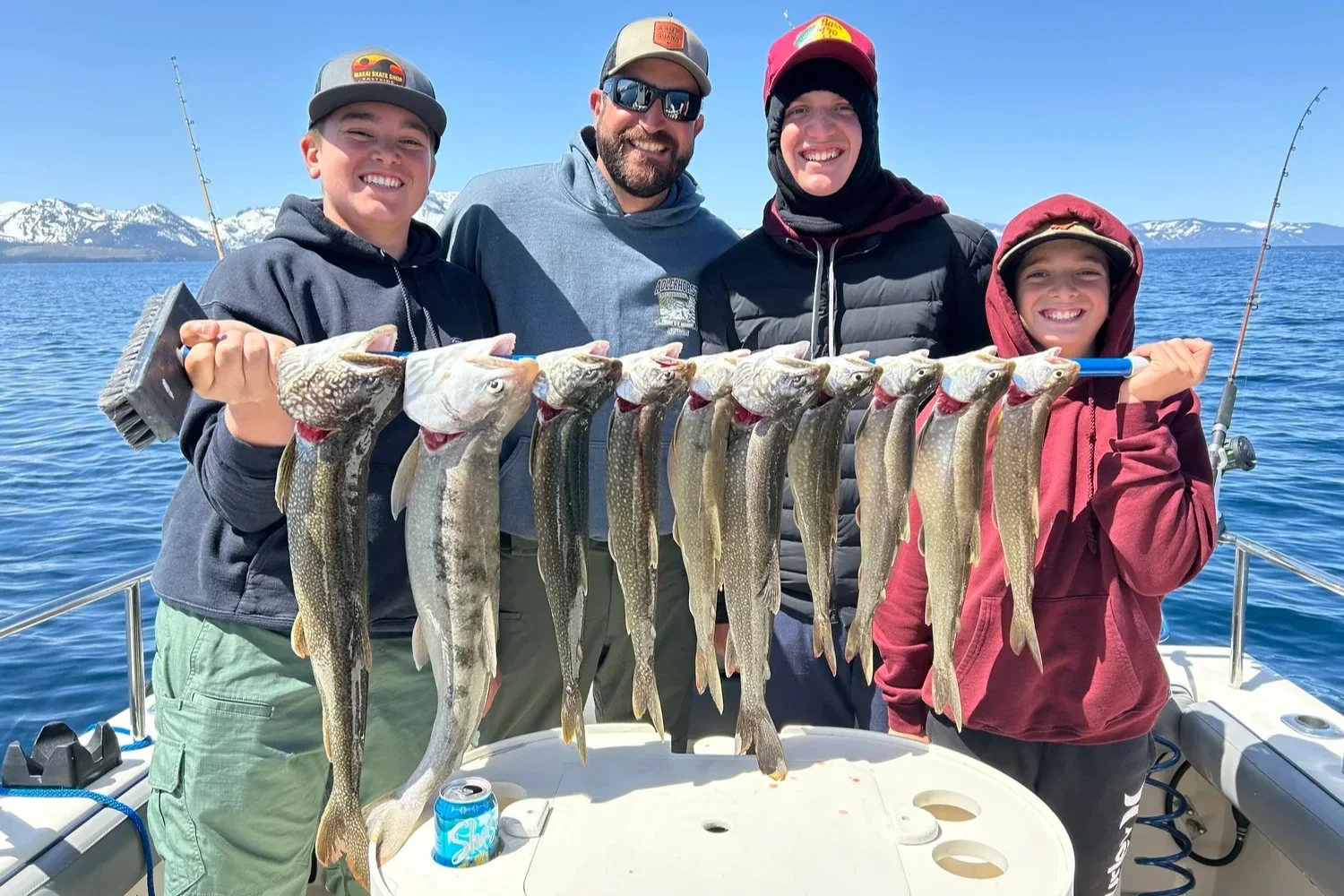
How to catch a Mackinaw
🎯 Where Mackinaw Are in Lake Tahoe
They stay in deep, cold water year-round
Most commonly:
Summer: 80–200+ ft deep
Winter/Spring/Fall: can be 30–150 ft (shallower in colder water)
Look for:
Steep drop-offs & underwater shelves
Rocky structure (points, ledges, deep basins)
👉 Key mindset: You’re not fishing “shorelines”—you’re targeting underwater terrain.
🚤 Best Techniques (What Actually Works)
1. Deep Water Jigging
Drop a jig straight down to the bottom (often 100–300 ft)
Use:
Tube jigs
Heavy spoons
White or baitfish colors
Keep it bouncing near bottom—mackinaw feed there
2. Trolling (best for covering water)
Run gear 80–200 ft deep with:
Downriggers (huge advantage)
Flashers + lures
Speed:
Slow (around 1–2 mph)
Productive lures:
Rapalas
Flatfish plugs
Spoons
3. Live Bait (very effective)
Best baits:
Minnows
Nightcrawlers
Must be native bait caught in Tahoe (important regulation)
📍 Proven Areas in Lake Tahoe
Deep structure near these zones:
West Shore (deepest water)
Rubicon Point (huge drop-offs)
Dollar Point
Cave Rock
Emerald Bay edges
⏰ Best Times
Early morning & late evening = best bite
Fall: arguably best overall fishing (fish feeding heavy)
Winter: fish come shallower = easier access
Summer: deeper, tougher without gear
⚠️ Reality Check (Most People Miss This)
Mackinaw are usually too deep for shore fishing
A boat + fish finder (sonar) is almost essential
You’ll often fish 100–300+ feet down
🧠 Pro Tips (this is what separates beginners from guys who catch)
Don’t fish blind — use sonar to find bait + structure
If no bites in 30–45 min → move
Stay near bottom — they’re predators chasing baitfish
Reel steady — they have soft mouths (easy to lose fish)
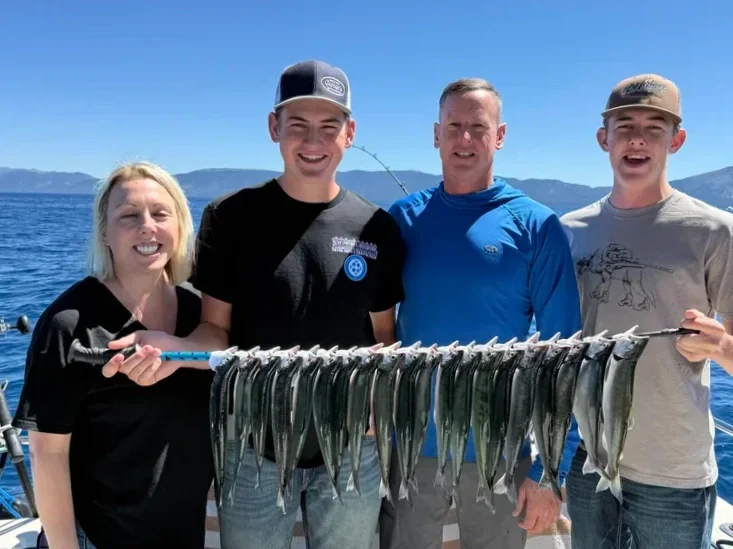
KOKANEE FISHING LAKE TAHOE
Kokanee fishing on Lake Tahoe offers anglers an exciting and accessible opportunity to catch bright, hard-fighting landlocked sockeye salmon—especially productive in late summer and early fall when schools move inshore to feed and begin their spawning migrations. These fish are typically pursued with light tackle, spoons, small jigs, or drifting cured roe, and anglers often find consistent success near rocky shorelines, submerged drop-offs, and at depths where plankton and baitfish concentrate. Kokanee respond well to steady, subtle presentations and are most active during low-light periods—early morning, late afternoon, and overcast days—although sonar, downriggers, and careful depth control can locate deeper schools throughout the day. Their firm, flavorful flesh makes them a popular catch for both sport and the dinner table, and the combination of easily learned techniques, reliable action, and the scenic Lake Tahoe surroundings makes kokanee trips a welcoming, rewarding choice for families and anglers of all skill levels.
Kokanee salmon are one of the most sought-after fish in Lake Tahoe because they fight hard for their size and are excellent table fare. In Tahoe they are usually caught by trolling from a boat, not from shore, because they often suspend deep in the water column — commonly 75–150 feet down in summer.
Best time to fish
Prime season: July through September
Early morning: usually the best bite
Late summer: fish often school before moving toward spawning areas like Taylor Creek in fall.
Effective Kokanee setup
Most successful anglers use:
Small dodger or sling blade
8–14 inch leader
Pink, orange, or chartreuse hoochies/spinners
Shoe-peg corn scented with garlic/anise
Trolling speed around 1.0–1.5 mph
A lot of Tahoe anglers fish them with:
Downriggers
Lead core line
Small pink/orange lures tipped with scented corn
Where in Tahoe
Common productive zones include:
South shore near Taylor Creek
Offshore drop-offs
Areas where bait schools show on sonar
Kokanee travel in schools, so electronics can make a huge difference finding depth and location.
Important tip
Kokanee have very soft mouths, so:
Use a light drag
Don’t set the hook too hard
Keep steady pressure while reeling
This helps prevent them from shaking free.
Limit
Lake Tahoe’s general trout/salmon limit is often 5 fish total, but regulations can change between the California and Nevada sides, so always check current state rules before going.
If you'd like, I can show you the best lure colors and exact trolling depths for kokanee on Lake Tahoe during April–June, since spring depth can be different from summer.
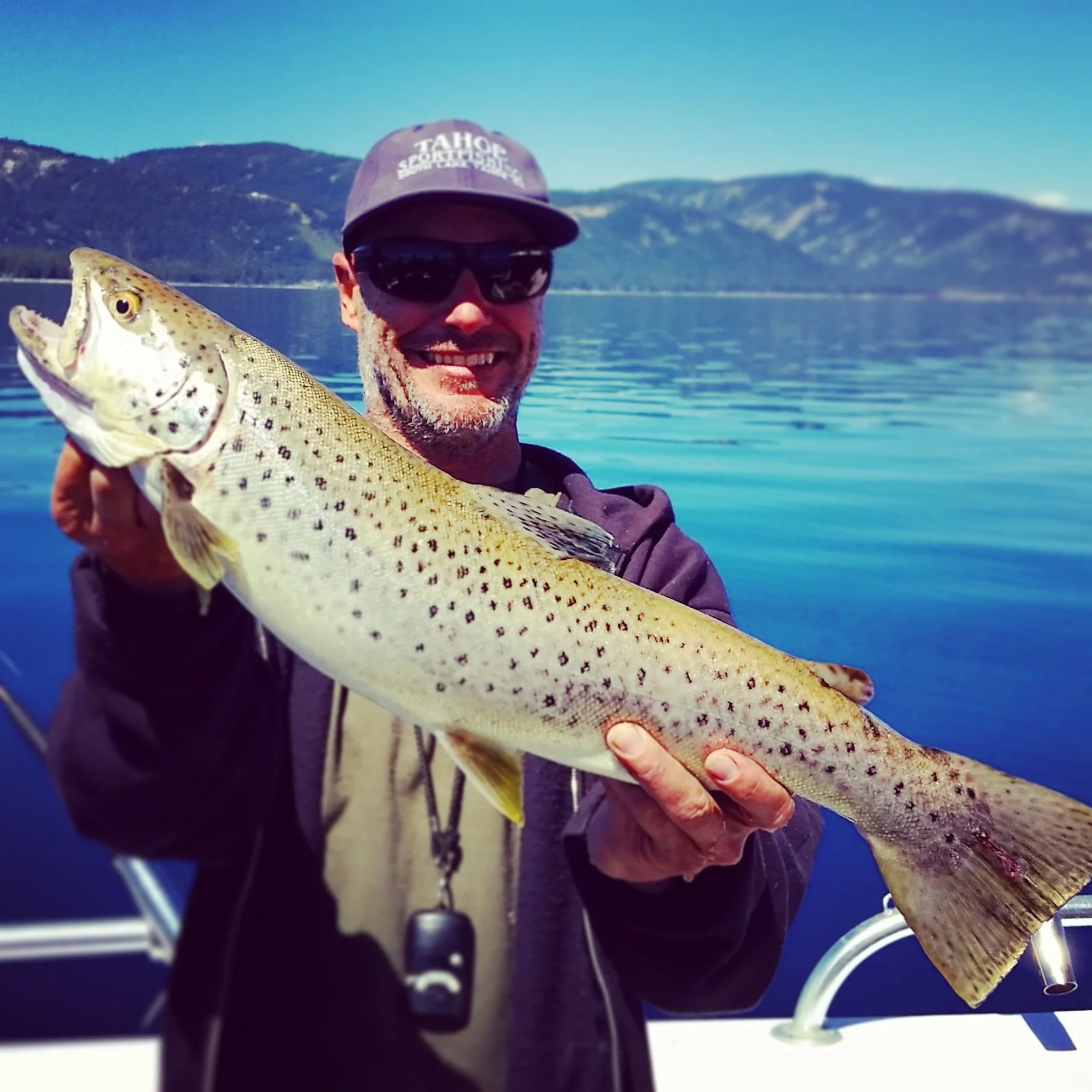
Shore Fishing
How to fish from shore in Lake Tahoe
🎣 What You Can Catch from Shore
Lake Tahoe’s main sport fish include:
Rainbow trout – the most common shore catch.
Brown trout – possible in deeper or rocky areas.
Bass & crappie – in warmer, vegetated shallower bays (more common in places like Tahoe Keys).
Lake trout (mackinaw) and kokanee salmon are abundant but much harder to catch from shore because they stay in deep water most of the year.
📍 Best Shore Fishing Spots
Here are shore-accessible locations around Lake Tahoe (CA/NV) where fishing is possible and often productive:
🪨 East Shore
Cave Rock / Zephyr Cove – Known for deep water just off shore and good access from parking areas; reliable for rainbow trout and browns using standard bait/spinner rigs.
Sand Harbor – Rock corners with deep water close to shore; stocked trout are often caught here.
Kings Beach (north shore) – Shallow breaks and accessible shore make this a good summer spot for rainbows and warm-water species.
🪵 South & West Shore
Rubicon Point / Emerald Point – Rocky shoreline with quick drop-offs; better chances than sandy beaches.
Stateline Point and Eagle Point – Similar structure with ledges not far from shore.
Upper Truckee River mouth / Keys Marina area – Where river enters lake; trout and bass can be caught especially in warmer months.
Note: Much of Tahoe’s shoreline is steep, rocky, private, or inaccessible, so productive shore access is limited to public beaches, parks, and boat ramps.
🪶 Best Times & Techniques
🎯 Timing
Early morning & evening are the most productive — fish stay shallower when the water is cooler.
Spring & early summer can be better for shore trout before fish move deep in warmer months.
🪝 Tackle & Bait
Rod setup: Medium spinning rod with 6–10 lb line.
Baits & lures:
Nightcrawlers or salmon eggs
PowerBait for trout
Small spinners (Mepps, Rooster Tails) or Rapala plugs
Cast toward rocky drop-offs or points — that’s where fish are likeliest to feed.
📜 Licenses & Regulations
Anyone 16+ needs a valid fishing license for the state you’re fishing in (California or Nevada).
In Lake Tahoe, live bait must be native and sourced from Tahoe (e.g., Lahontan Redside Shiner, Tahoe Sucker).
Seasonal closures and buffer zones apply near tributaries and spawning streams (e.g., no fishing within 300 ft of many inlets during certain seasons).
🧠 Shore Fishing Tips
✔ Be patient — Tahoe’s water clarity and depth mean fish can be sparse right at the bank.
✔ Target structure — rocky drop-offs, points, and creek mouths often hold more fish.
✔ Stay stealthy — the clear water spooks fish easily, so minimize movement and shadows near the water.